
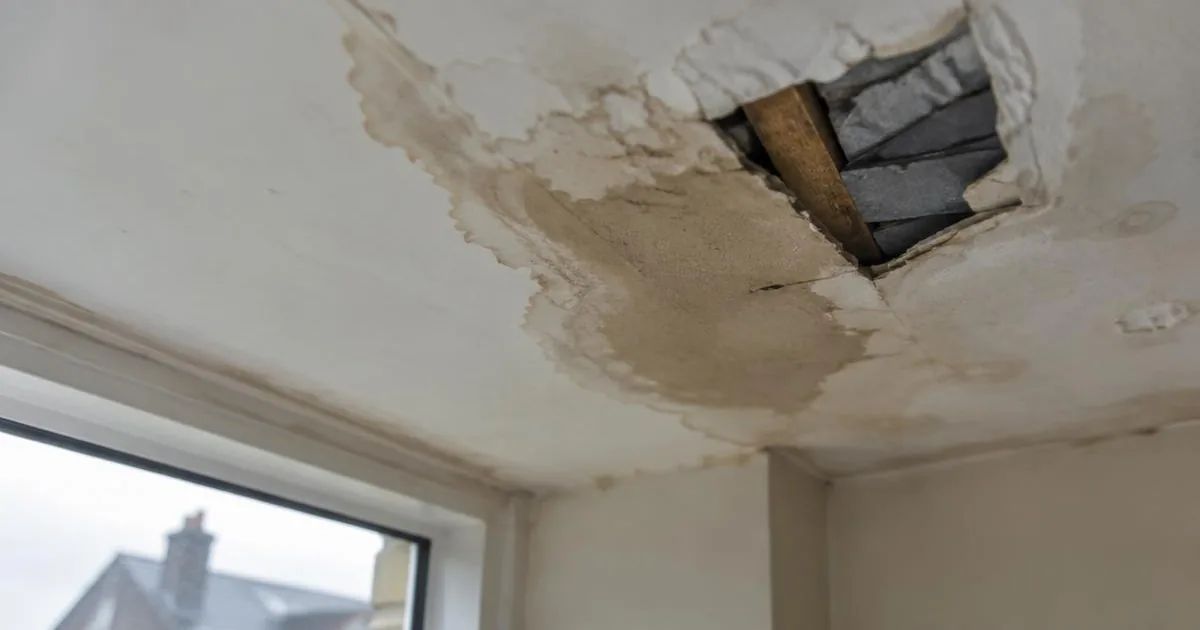
A leaking roof doesn't necessarily mean you need a new roof. In many cases, water is getting in through a relatively localised problem such as a slipped tile, damaged flashing, a blocked valley or a defect around a chimney.
The important thing is to find the actual source of the leak rather than simply treating the damp patch you can see inside.
If you've noticed water coming through a ceiling, damp in the loft or staining that appears after heavy rain, here's what may be happening — and what to do next.
What are the most common causes of a leaking roof?
Some roof leaks are obvious. Others can be surprisingly difficult to trace.
Common causes include:
- slipped, cracked or missing roof tiles
- damaged or missing slates
- failed lead flashing
- chimney defects
- blocked or damaged valleys
- problems around rooflights or vents
- damaged flat-roof coverings
- overflowing or defective guttering
- ageing roofing materials
- previous repairs that have begun to fail
One of the reasons roof leaks can be deceptive is that the place where you see water inside your home is not necessarily directly beneath the problem outside.
Water can travel along roofing membranes, rafters and other parts of the roof structure before it eventually appears on a ceiling or wall. That is why identifying the source properly is often more important than simply looking at the nearest roof tile.
1. Slipped, cracked or missing roof tiles
A slipped or damaged tile is one of the more obvious potential causes of a leaking pitched roof.
Tiles can move or become damaged because of:
- strong winds
- storms
- ageing fixings
- frost
- impact
- previous work on the roof
- general deterioration over time
Even a relatively small opening can allow wind-driven rain beneath the main roof covering. You may be able to spot a visibly displaced tile from ground level, particularly after bad weather, but some defects are much harder to see.
What should you look for?
From ground level, look for:
- tiles sitting out of line
- obvious gaps
- cracked tiles
- missing sections
- tiles or fragments in gutters or on the ground
2. Damaged lead flashing
Flashing is used to weatherproof vulnerable junctions in a roof. You'll commonly find it around chimneys, adjoining walls, dormers, valleys, roof penetrations and other areas where different surfaces meet.
If flashing has lifted, cracked, deteriorated or become detached from the surrounding masonry, rainwater may find a route into the roof.
A damp patch around a chimney breast, for example, doesn't automatically mean that the chimney itself is leaking. The flashing around it may be the source. Roof junctions are therefore one of the first areas a roofer may inspect when trying to trace water ingress.
3. Chimney problems
Chimneys introduce several additional potential entry points for water. These may include problems with:
- flashing
- pointing
- brickwork
- mortar
- chimney pots
- the top of the chimney stack
Because a chimney passes directly through the roof, relatively small defects around it can sometimes lead to noticeable water ingress inside the property.
If staining is appearing close to a chimney breast, it is worth having the complete chimney and surrounding roof junction checked rather than assuming one particular component is responsible.
4. Problems with roof valleys
A roof valley is the channel formed where two sloping sections of roof meet. Because rainwater from both roof slopes is directed towards the valley, it handles a significant amount of water during heavy rain.
Problems may occur if:
- debris blocks the valley
- the valley lining becomes damaged
- tiles alongside it move
- previous repairs deteriorate
- water can no longer drain freely
Valley problems can sometimes create considerable water ingress because of the volume of rainwater passing through that part of the roof.
5. Guttering that is blocked or overflowing
Not every apparent roof leak actually begins with the roof covering. Blocked or damaged gutters can allow water to overflow in places it shouldn't.
This can affect:
- fascias
- soffits
- external walls
- roof edges
- timber behind the roofline
During prolonged or heavy rain, water that cannot drain correctly may find its way into the building. If damp is appearing close to the edge of a roof or an outside wall, the guttering and roofline are therefore worth checking as part of the investigation.
6. Flat roof damage
Flat roofs can develop leaks for different reasons from pitched tiled roofs.
Potential problems include:
- splits or cracks
- damaged joints
- failed edges
- defects around outlets
- deterioration around roof penetrations
- ageing roofing materials
- areas where water is not draining correctly
A flat roof problem doesn't automatically mean the entire covering needs replacing. Whether a repair or replacement makes more sense depends on the type of roofing system, its age, overall condition and the extent of the damage.
If you have a flat roof problem, see our flat roofing services or ask Hewitson to assess the existing roof.
7. Rooflights, vents and other penetrations
Any component that passes through or interrupts a roof surface needs to be properly weatherproofed.
Examples include:
- roof windows
- vents
- pipes
- extractors
- aerial fixings
- solar-related penetrations
Seals, flashing or surrounding roofing materials can sometimes deteriorate, particularly around older installations. If a leak appears close to a rooflight or another roof penetration, the surrounding detailing should be checked rather than assuming the window or fitting itself needs replacing.
8. An ageing roof
Sometimes there isn't one dramatic failure. A roof may gradually become more vulnerable because several components are reaching the end of their useful life.
Signs may include:
- repeated slipped tiles or slates
- recurring leaks in different areas
- deteriorating mortar
- brittle or damaged materials
- previous repairs beginning to fail
- widespread deterioration rather than one isolated defect
This doesn't automatically mean you need a complete new roof. A good roofing assessment should distinguish between a local repairable problem and wider deterioration where repeatedly repairing individual areas may no longer represent good value.
Why does my roof only leak when it rains heavily?
A roof can sometimes cope with ordinary rainfall but leak during particularly heavy or wind-driven rain.
This may happen when water is being forced into a vulnerable junction that isn't normally exposed to the same volume or direction of rain.
Potential areas include:
- flashing
- valleys
- roof edges
- damaged tiles
- chimney junctions
- rooflights
Strong North East winds can also drive rain beneath roofing materials from directions the roof doesn't normally experience. A leak that only appears during severe weather is still worth investigating. It may be an early indication of a defect that could gradually worsen.
Why is the damp patch nowhere near the roof problem?
Water rarely behaves as neatly as we'd like it to.
Once rainwater gets beneath the roof covering, it may travel along roofing felt or membrane, rafters, timber, pipework, insulation and ceiling structures before reaching a point where it becomes visible.
Consequently, a stain on a bedroom ceiling may originate some distance further up the roof. This is one reason why simply replacing the tile directly above a damp patch doesn't always solve a leak. The complete route of the water needs to be identified.
Could it be condensation rather than a roof leak?
Yes.
Not every sign of moisture inside a loft is caused by rain getting through the roof. Condensation can occur when warm, moisture-laden air from inside the house reaches colder surfaces within the roof space.
You may be dealing with condensation rather than a roof leak if moisture:
- appears even when it hasn't rained
- is widespread rather than concentrated in one location
- is particularly noticeable during colder weather
- forms on the underside of roofing materials or timbers
Bathrooms, kitchens, drying clothes indoors and inadequate ventilation can all contribute to moisture inside a property.
A proper assessment should therefore establish whether the water is coming through the roof or being generated inside the building before repair work is recommended.
Is a leaking roof an emergency?
It depends on the severity of the leak. A small damp mark that has recently appeared may not require emergency attendance, but it should still be investigated.
Seek urgent help if:
- water is coming through heavily
- a ceiling is bulging or sagging
- a significant section of the roof has been damaged
- water may be reaching electrical fittings
- tiles or roof materials have become dangerous or unstable
What should I do when I notice a roof leak?
The first priority is limiting damage safely.
Move valuables away
Move furniture, electrical items and other belongings away from the affected area where practical.
Contain dripping water
Use a suitable container to catch water if it is safe to do so.
Take photographs
Photographs of the internal damage, visible roof damage from ground level, and fallen tiles or roofing materials can be useful when explaining the problem to a roofer and may also be helpful if an insurance claim is required.
Don't climb onto the roof
Trying to inspect or temporarily repair a wet roof yourself can be dangerous. Take photographs from the ground if you can do so safely and leave closer inspection to somebody with the appropriate access equipment.
Arrange an inspection
The important next step is to establish: where the water is entering, why it is happening and what needs to be repaired to prevent it returning.
Does a leaking roof mean I need a new roof?
No.
A roof leak does not automatically mean the roof needs replacing.
Many leaks are caused by local defects that can be repaired, such as individual damaged tiles, isolated flashing problems, a damaged valley, a local chimney defect or a problem around a roof penetration.
However, if the roof is older and problems are occurring repeatedly across different areas, it may make more sense to assess the condition of the roof as a whole.
Hewitson will assess the problem and explain whether a targeted roof repair or more substantial work is appropriate. The objective should be to solve the underlying problem — not automatically recommend the largest job.
Roof leak repairs in Blyth and Northumberland
Hewitson Roofing is based in Blyth, Northumberland and undertakes roof repairs throughout Northumberland and surrounding parts of the North East.
Our roof repair work includes problems involving:
- leaking roofs
- slipped and damaged tiles
- slate repairs
- flashing
- valleys
- chimneys
- storm damage
- guttering and roofline
- flat roofing
- associated roofing defects
If you aren't sure where the leak is coming from, you don't need to diagnose it yourself. Tell us what you've noticed and we'll help determine the appropriate next step. You can also check the areas we cover or contact Hewitson directly.